
Doing Well
August 22, 2026 • Estimated Reading Time: 3 minutes
We've been quietly rebuilding something for weeks, and it's finally live. Our website now splits into three tracks: Individuals, Couples, and Early Career.

Why we did it this way: Building savings solo looks nothing like merging finances with a partner, which looks nothing like figuring out your first 401k. Different starting points deserve different guidance, and we wanted it to be clearer on our website.
Now here's where you come in. Think of one person who'd fit into one of those three tracks. A friend building savings on their own, a couple sorting out shared finances, someone brand new to their career. Send them our way and when they sign up, they get $50 off their quarterly/yearly plan and you get $50.
P.S. If you want to talk through your own finances, you can book a free 1-hour coaching session here ☎️
The world's first person to be worth $1 billion made his fortune around... when? |
(Actual answer at the end of the newsletter 👇)
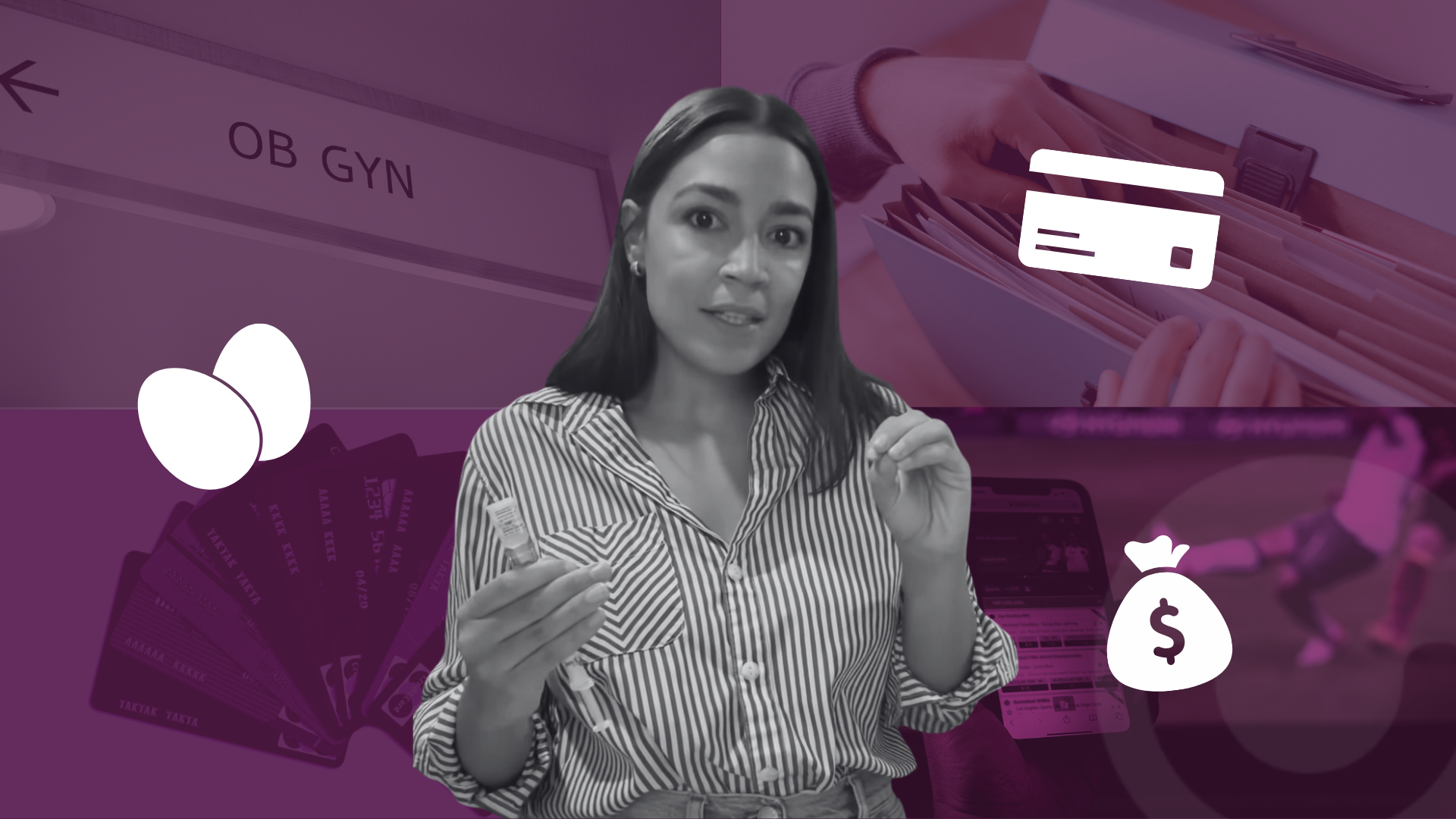
AOC said this week that her insurance "does not cover one penny" of her egg freezing. Fair warning if you've never priced this out: the number is worse than you think.
A single cycle runs $8,000 to $20,000 depending who you ask, and that's just the retrieval and hormone stimulation. Storage is billed separately, another few hundred to a thousand dollars a year, for as long as you keep the eggs frozen. Only 19% to 21% of large employers cover any of it, and even at the companies that do, none of what you pay counts toward your deductible or out-of-pocket max. Insurance has quietly decided this isn't medical, but elective. That means you're negotiating against a price with no ceiling and no network rate to fall back on.
That gap between "covered" and "elective" shows up everywhere, and not just in fertility-related procedures. LASIK, most cosmetic dental work, a lot of mental health treatment outside your plan's network.

If you're staring down anything with that same "elective" label on it:
👉 Ask if it counts toward your deductible. One question to the clinic or your insurer's benefits line tells you whether you're paying negotiated rates or full sticker price.
👉 Ask HR directly, even if the benefits page says nothing. Some companies have coverage that never makes it into the official materials, and the only way to find out is to ask.
👉 Get quotes from more than one provider. Prices for the same procedure can differ by thousands within the same city, so a few phone calls can save real money.
👉 If this is on your radar for later, treat it like a down payment. A separate savings account you build toward over time hits a lot less hard than trying to cash flow it all at once.
Big out-of-pocket costs deserve a real plan. Book a call and let's build one.
🚨 Take action
Your data was probably in one of 1,803 breaches this year
More breach notices went out in the first half of 2026 than there are people in the US, and 76% of them don't even say how it happened. Freeze your credit and turn on multi-factor authentication if you haven't already.
Source📌 Pay attention
Nearly half of new grads are back in their childhood bedroom
49% of recent college grads moved back home after graduating, and 46% of them are still there. Only 7% of current students actually want that outcome.
Source👀 Keep an eye
Renters are giving up on the idea of ever moving
The share of renters who expect to move in the next 3 years dropped 20 points in 12 years, and it tracks almost exactly with how many of them still believe they'll ever own a home.
Source👌 Looking Up
Mortgage rates just hit a 4-week low
The average 30-year fixed rate dropped to 6.69% as oil prices cooled off, small relief, but relief.
SourceThe Panic Meter reflects our editorial read on urgency — not financial advice.

Number of non-retirees who doubt they'll ever fully retire
Confidence in retiring on schedule actually held steady this year at 58%. But nearly half of non-retirees now think "full retirement" might not be a real finish line for them, more of them expect to keep earning income after leaving their primary career. AI anxiety is part of it: 63% of Gen Z non-retirees think AI will hurt their retirement outlook.
Credit card balance growth in a single quarter
Total US credit card debt now sits at $1.26 trillion, and interest rates on that debt are hovering around 22%. If you're carrying a balance, the math is working against you every single day it sits there.
Gen Z investors who call sports betting part of their long-term financial strategy
That's compared to 14% of millennials, 6% of Gen X, and just 1% of boomers. Betting apps make it feel as easy as buying a stock, but the house edge guarantees losses over time. That's the opposite of how actual long-term strategies are supposed to work.
Need to talk numbers? We can help you sort out your money.
B) The late 1800s
By the time he was in his 30s, John D. Rockefeller already built Standard Oil into the dominant force in American oil. That’s already decades before "billionaire" was even a word anyone used, since the term itself didn't really enter common use until the 1910s when reporters needed something to call him.